Optivideo · Optifeed · 2026
Designing and Shipping a Feature End-to-End
An AI video generation prototype for product feed advertising, built with Claude Code and Codex
01 Status
Current status
Prototype complete and live. Two internal stakeholder feedback sessions. Solution spec handed to engineering. First technical version in development. Not launched; no customer usage claim.
02 Summary
Optivideo is a working prototype for AI product video generation inside Optifeed's product feed platform.
I owned the product direction, built the interactive prototype with Claude Code and Codex, and shaped the flow through two internal stakeholder feedback sessions.
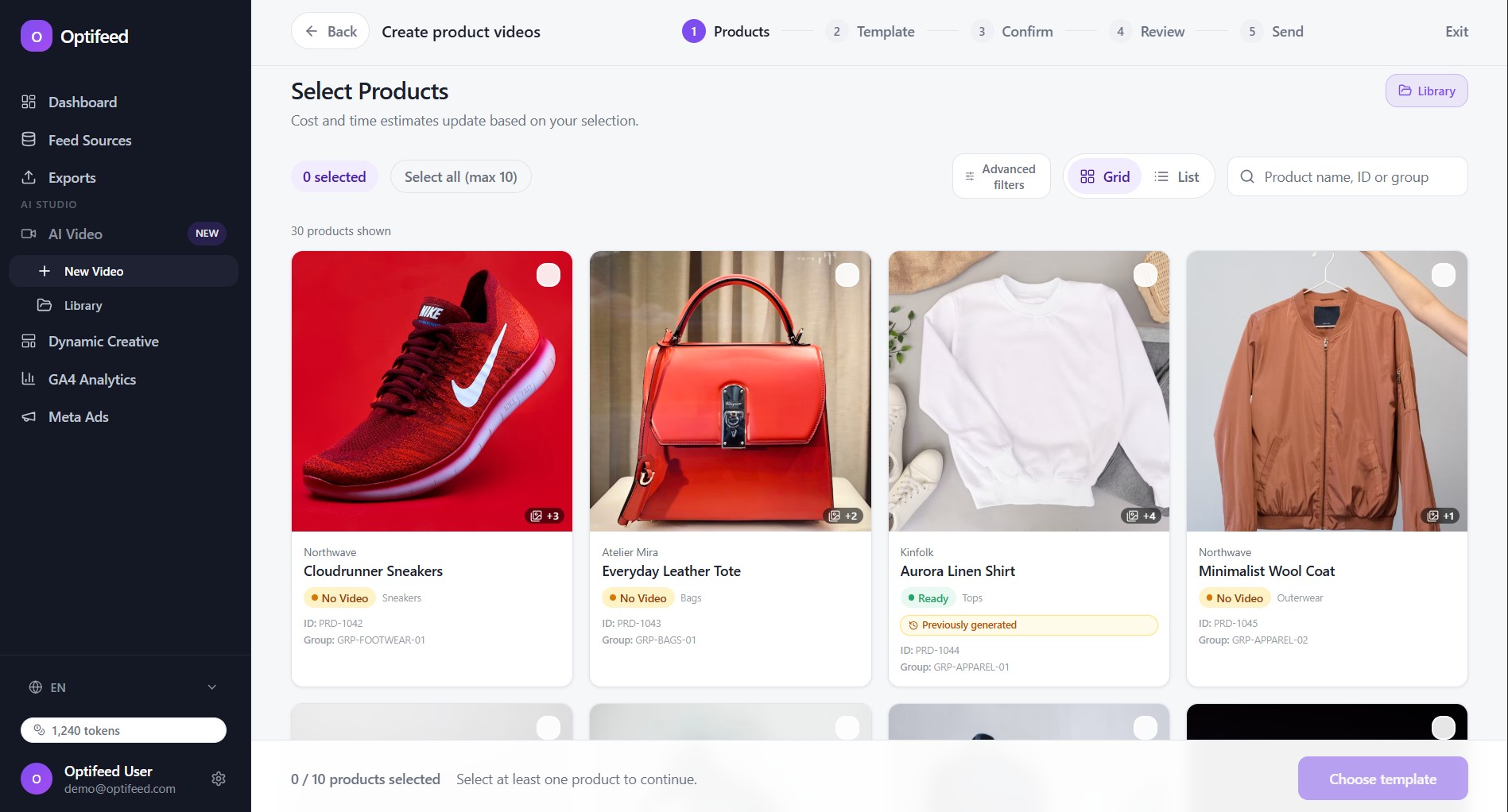
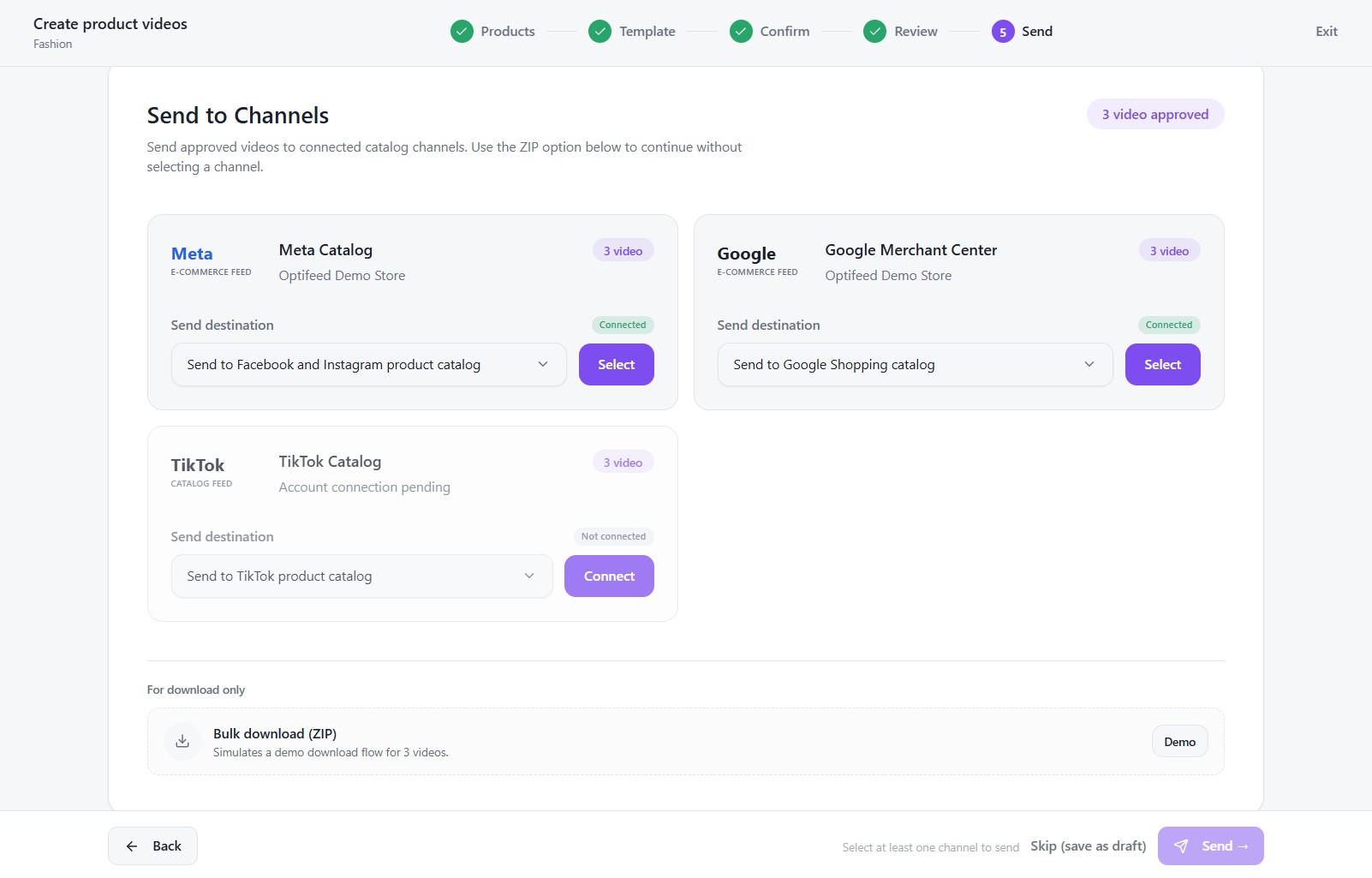
The prototype covers product selection, scenario/template selection, confirmation, review, approval, and channel export. After iteration, I handed engineering a solution spec based on the working prototype.

03 Problem
E-commerce and marketing teams often have product data and images, but product-level video creative is slow, manual, and hard to scale across catalog ads.
Optifeed already sits at the feed layer: product data, product images, and channel distribution. That made AI video generation a logical product direction, but only if the workflow gave users enough control before anything moved toward an ad channel.
04 Riskiest Assumption
What needed to be tested
The riskiest assumption was not whether AI could generate a video. It was whether a marketing or e-commerce user could understand, trust, review, approve, and export a self-serve AI video flow without losing confidence.
05 My Role
- Product directionDiscovery, PRD/spec thinking, and scope decisions for the first testable version.
- Prototype buildAI-assisted prototype build with Claude Code and Codex.
- Feedback and iterationTwo internal stakeholder feedback sessions and iteration after feedback.
- Engineering handoffSolution spec handed to engineering with flow, decisions, states, and boundaries.
06 Prototype Flow
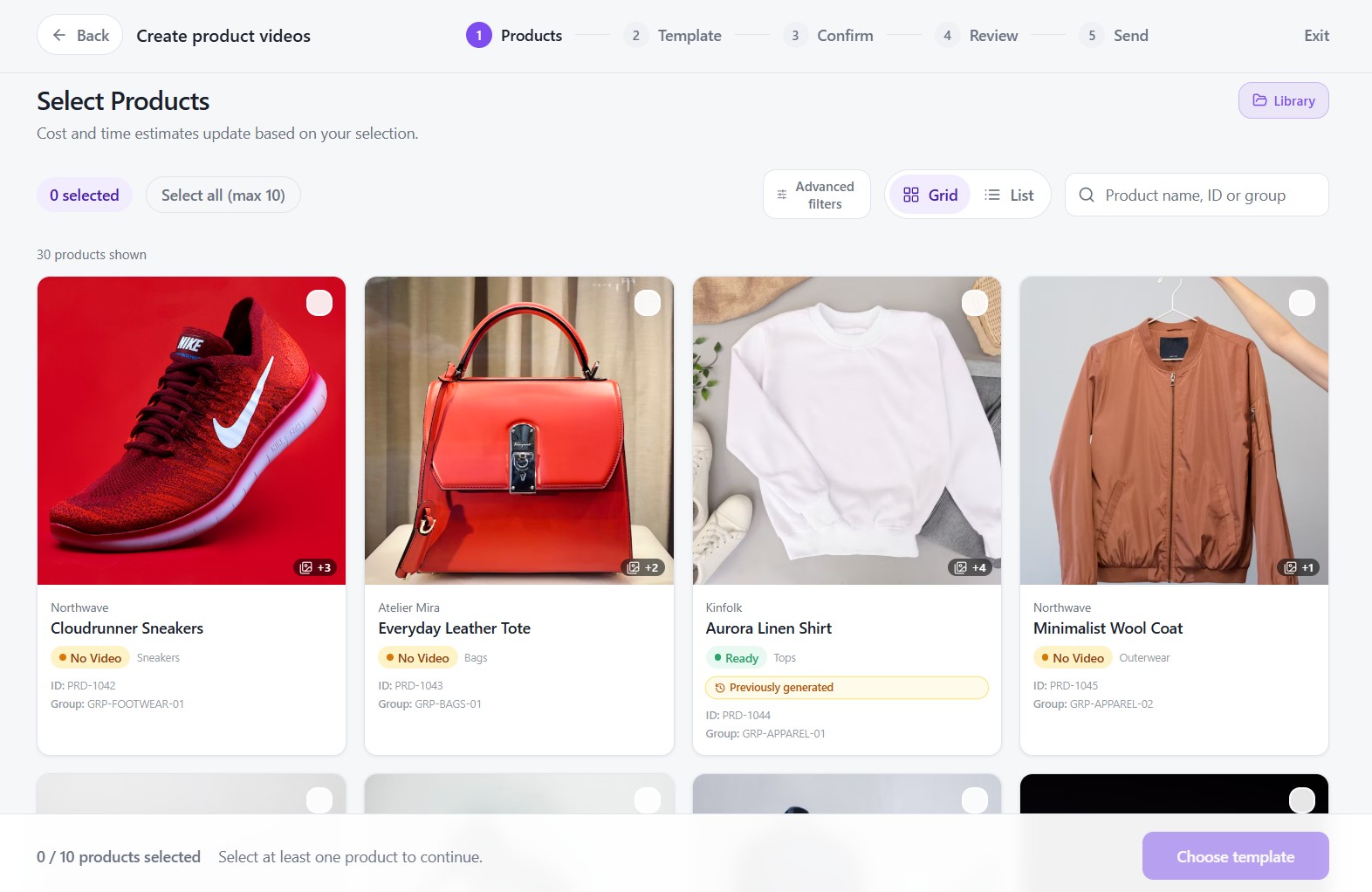
- StartProduct selection and campaign setup.
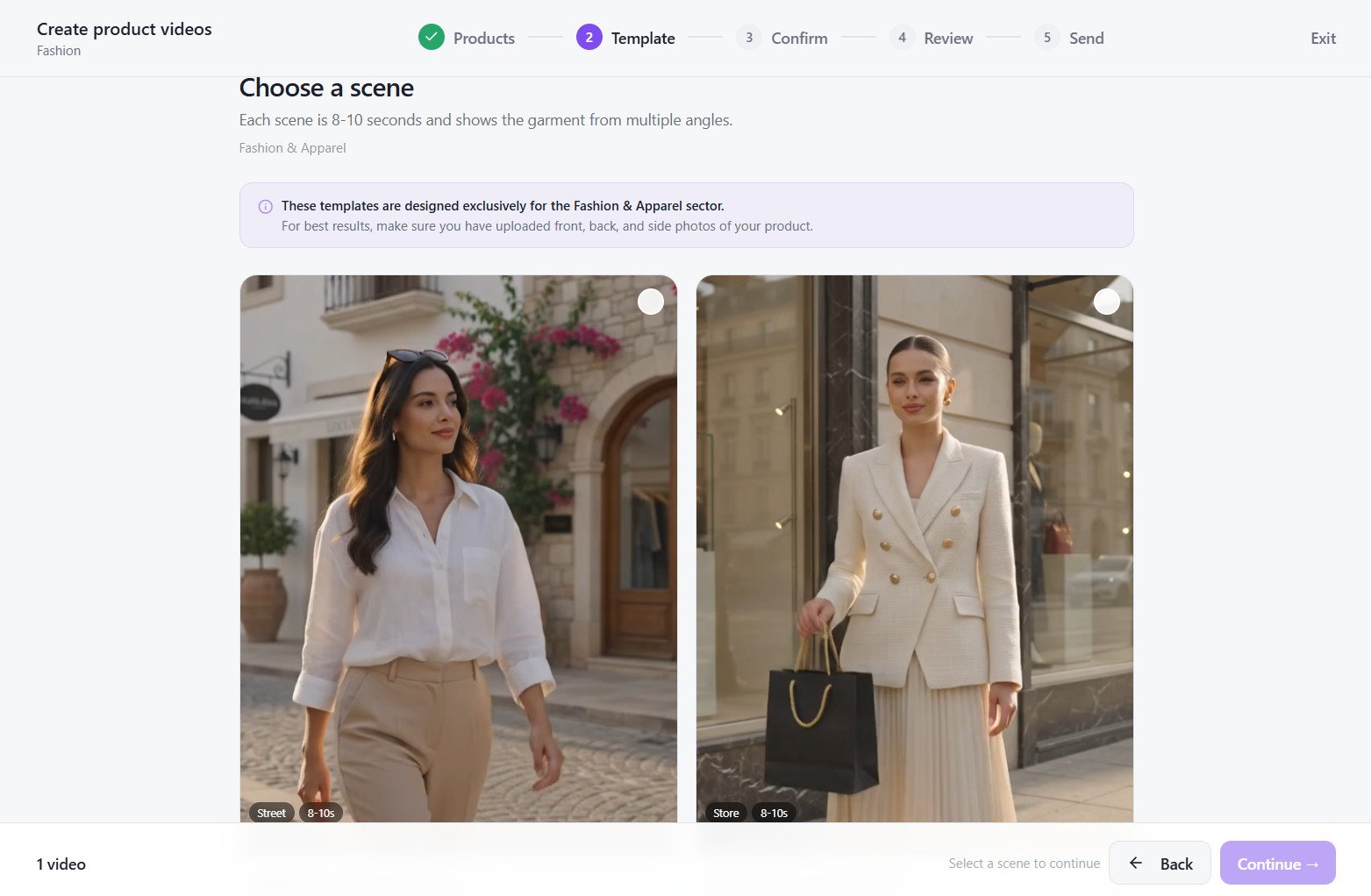
- ConfigureTemplate/scenario selection, including the Textile/Fashion branch.
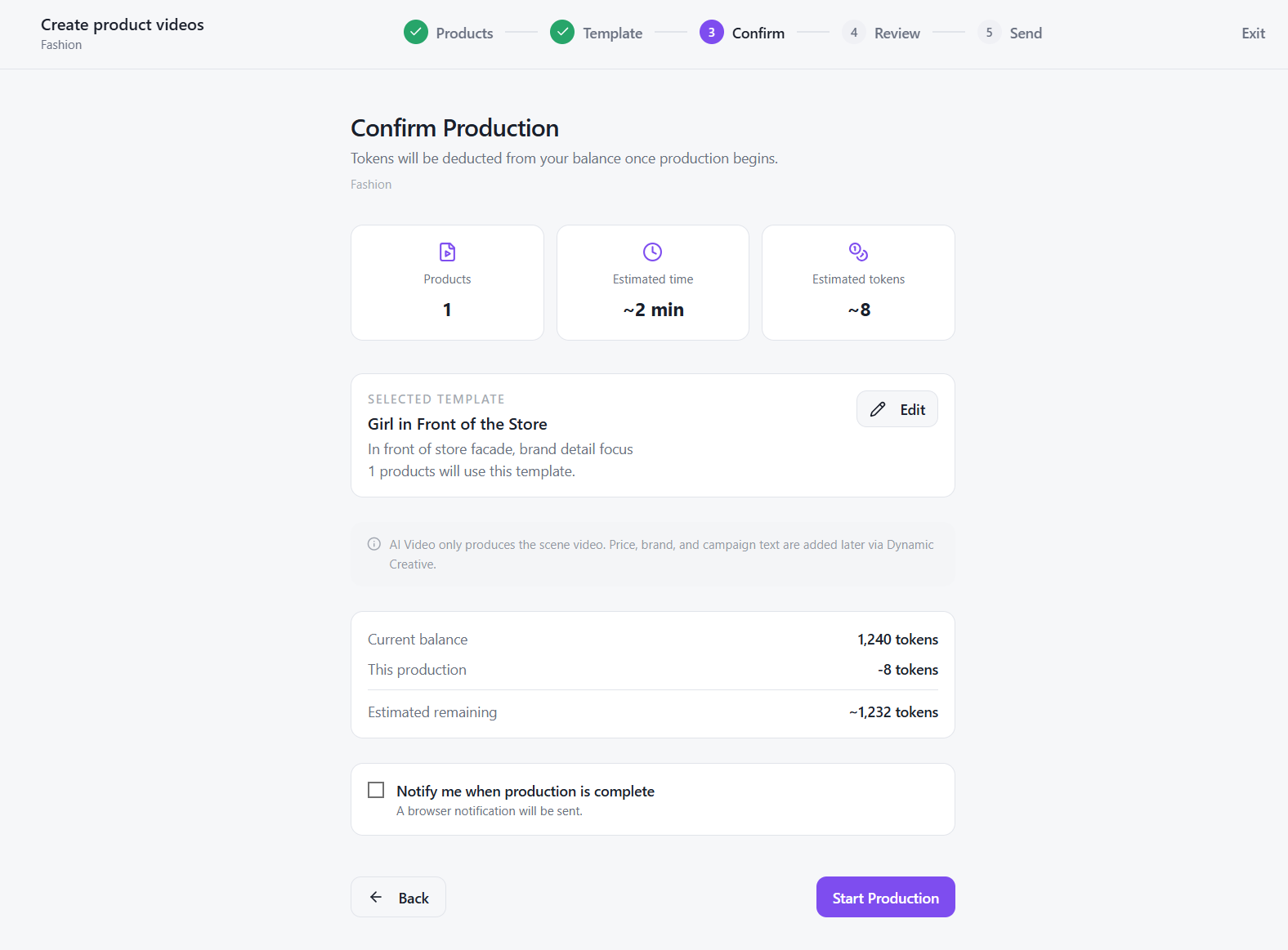
- CommitGeneration confirmation before the user spends tokens or waits for output.
- ControlReview, approval, reject/regenerate, and explicit channel export.


07 Key Decisions From Feedback
- Mandatory approvalReview and approval before export, so no video moves toward a channel automatically.
- Generation confirmationToken cost and estimated generation time shown before generation begins.
- Focused first scopeTextile/Fashion chosen as the first engineering scope.
- Explicit export controlChannel selection before export, so users decide where approved videos go.

08 Engineering Handoff
The handoff included the live prototype and a solution spec based on the working flow.
The goal was to give engineering a clearer starting point: product logic, key decisions, visible states, and explicit out-of-scope boundaries.

09 Current Status
The prototype is complete and live. The solution spec has been handed to engineering.
Engineering owns the first technical version now, and that version is in development.
The feature has not launched. There are no customer usage, adoption, revenue, ROAS, or performance metrics yet.
The feature is designed for rollout to Optifeed's existing B2B customer base. That customer-base context is not an adoption claim.
10 What This Proves
- Artifact before buildI can turn a product idea into a working artifact before engineering commits to the build.
- AI-assisted first versionI can use AI coding agents to create a testable first version while keeping product judgment in front.
- Feedback-driven flowI can test and improve product flow through internal stakeholder feedback.
- Stronger handoffI can hand engineering a clearer starting point: prototype, decisions, states, and solution spec.